Surfing in Tokyo for Beginners: Your First Time
Never surfed before? You can still have a real first session near Tokyo. Here's how beginners actually start, whether you need a lesson, and honest answers to the things first-timers worry about.
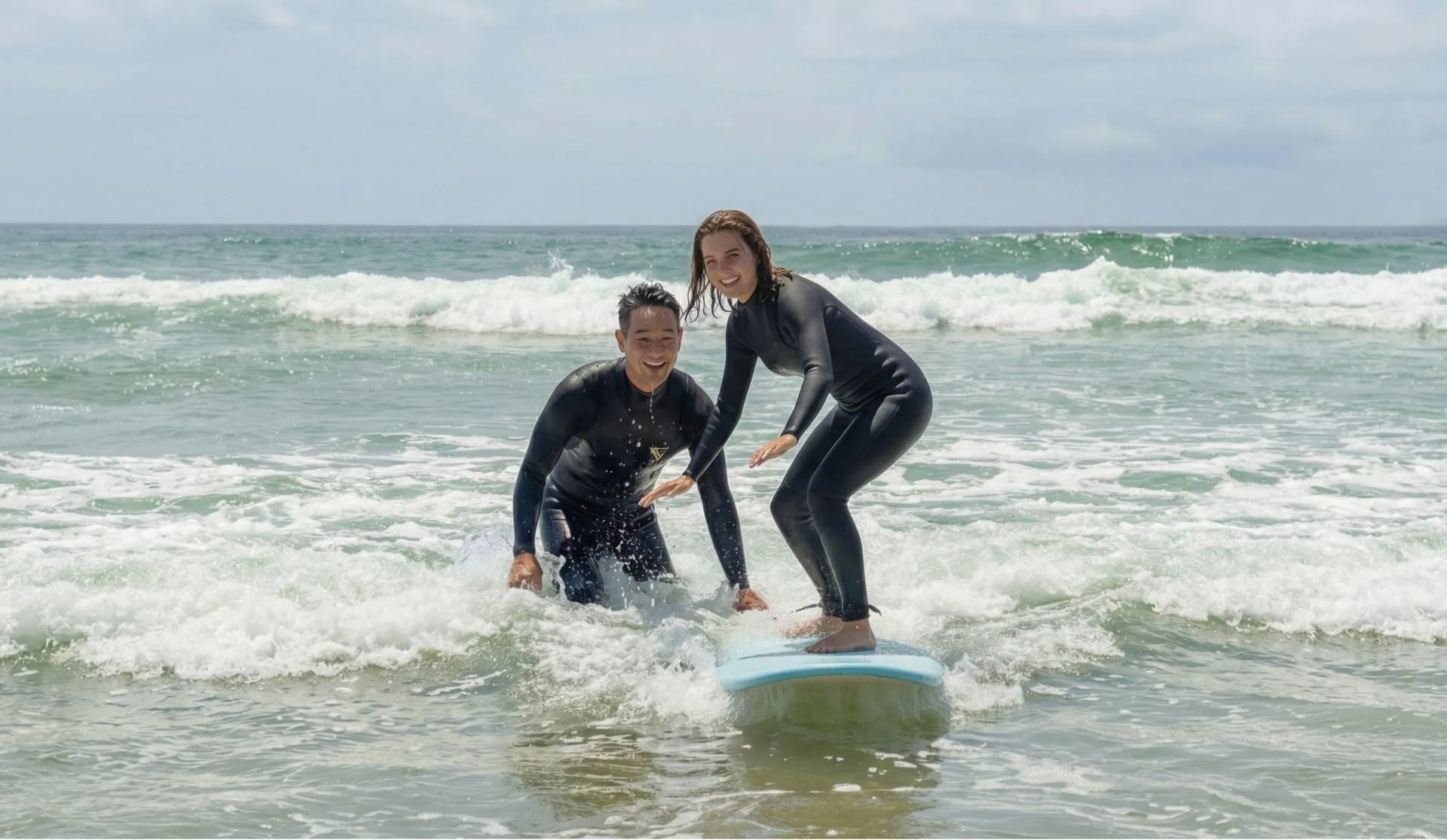
Can a complete beginner surf near Tokyo?
Yes. Complete beginners are welcome. You can't surf in Tokyo itself, but gentle, beginner-friendly surf spots near Tokyo are about 90 minutes away — spots like Taito or Onjuku in Chiba, or the Fujisawa beaches in Shonan. On a guided day, the board and wetsuit are provided, everything is explained in English, and we pick the calmest beach that suits the conditions. You just show up.
How do you start surfing in Japan?
The normal way to start is to walk into a surf shop. A good shop will tell you which beaches suit beginners, what gear you need, and usually offers rentals and lessons. (If you happen to have a surfer friend here, going with them works too — that's how a lot of people begin.)
For a visitor on a short trip, though, that's a lot of moving parts in a language you may not read: finding the right shop, renting gear, getting to a spot, and knowing where it's safe to paddle out. Removing all of that is exactly what a guided surf day trip from Tokyo is for — you get the surf-shop know-how, the gear, and a local who's done it thousands of times, in one go.
Do you need a lesson?
If it's your first time, I'd say yes — at least once. And not mainly for the reason you'd expect. The biggest value isn't learning to stand up; it's the basics that keep you and everyone else safe:
- How not to collide with other surfers, and how to not get in the way
- The rules and etiquette of the lineup
- How to use your leash
- How to judge what wave size is OK for you
- Reading what's going on around you in the water
These are things you can't fully pick up from a book or by watching. First-timers and pros share the exact same water, so getting them right matters. On top of that, you'll of course learn the actual surfing — paddling, popping up, and the knack of riding — which is the fun part.
Who needs a lesson? Almost every true first-timer, and anyone coming back after a long gap. If you've surfed more than about five times, you can probably skip it and just take the guided session.
What board will I ride?
Beginners should start on a longer board. It's easier to catch waves and to actually stand up on your first day — and standing up once is the fastest way to fall in love with surfing. As you improve, you get to choose your length. On a guided trip the board is provided and matched to you.
How far can you get in one day?
Further than you'd think. When I run a lesson, I support you all the way to riding a wave — standing up and riding is a realistic goal for a first day. And on the days it doesn't fully click, it's still a great day in the ocean; nobody leaves disappointed.
Honest answers to first-timer worries
I can't really swim — is that a problem?
It's fine if you can't swim. We stay in water you can handle, you're on a buoyant board, you wear a leash, and I'm right there with you.
What about sharks and dangerous sea life?
Honestly, not a concern here. Japan has very few sharks, and none at the day-trip spots near Tokyo. Genuinely dangerous marine life is almost nonexistent. The rare exceptions are a Portuguese man o' war (you can see them in the water if they're around, so they're easy to avoid) and stepping on a stingray's barb (northern Chiba only, near shore in autumn — also avoidable). Both are very rare.
Am I too old to start?
No. Any age can surf. The man who taught me to surf is in his late sixties and still does off-the-lip turns every day.
Do I need to respect the locals?
Yes — and it matters. Each spot has its own local culture, and surfing while respecting that spot's manners and behavior is important. This is another thing your guide handles: a quick heads-up on local etiquette so you can just relax and enjoy your session.
Who can join
- Age: 18 and over (younger by arrangement — just ask).
- Swimming: not required.
- Fitness: if you can jog, you're fine.
- Families: with small children, both parents are welcome to come and take turns surfing. If you'd like your kids to surf, that's a separate arrangement — just get in touch for anything out of the ordinary.
What's included
- Free hotel pick-up & drop-off in the Tokyo area
- English-speaking guide all day, on a beginner-friendly beach
- Surfboard (a beginner-friendly longer board) and wetsuit
- Safety briefing, local etiquette, and in-water support
- Insured local guide
Lessons are recommended for beginners at ¥8,000 per person when booking our trip. Just bring swimwear, a towel, sunscreen, and some cash for lunch.
A first day that worked
One guest — A.N. — was visiting Japan and had run out of the usual tourist activities; they wanted to do something different. We headed to Tsujido in Shonan. Not only did they catch their first ride, but Mt. Fuji came up clear and huge over the water. They left thrilled. That's the day I want first-timers to have.
Ready to surf near Tokyo?
Private day trip from Tokyo · English-speaking guide · From ¥64,000 per person (2 surfers; ¥88,000 solo) · Free cancellation up to 24h.
Book on GetYourGuide