Surfing in Tokyo: Can You Really Surf Near Tokyo?
Tokyo itself isn't a surf town — but real, rideable waves sit just 90 minutes away, and because Japan faces the open Pacific, there's almost always something to surf. Here's where to go, when, and how to make it happen on a day trip.
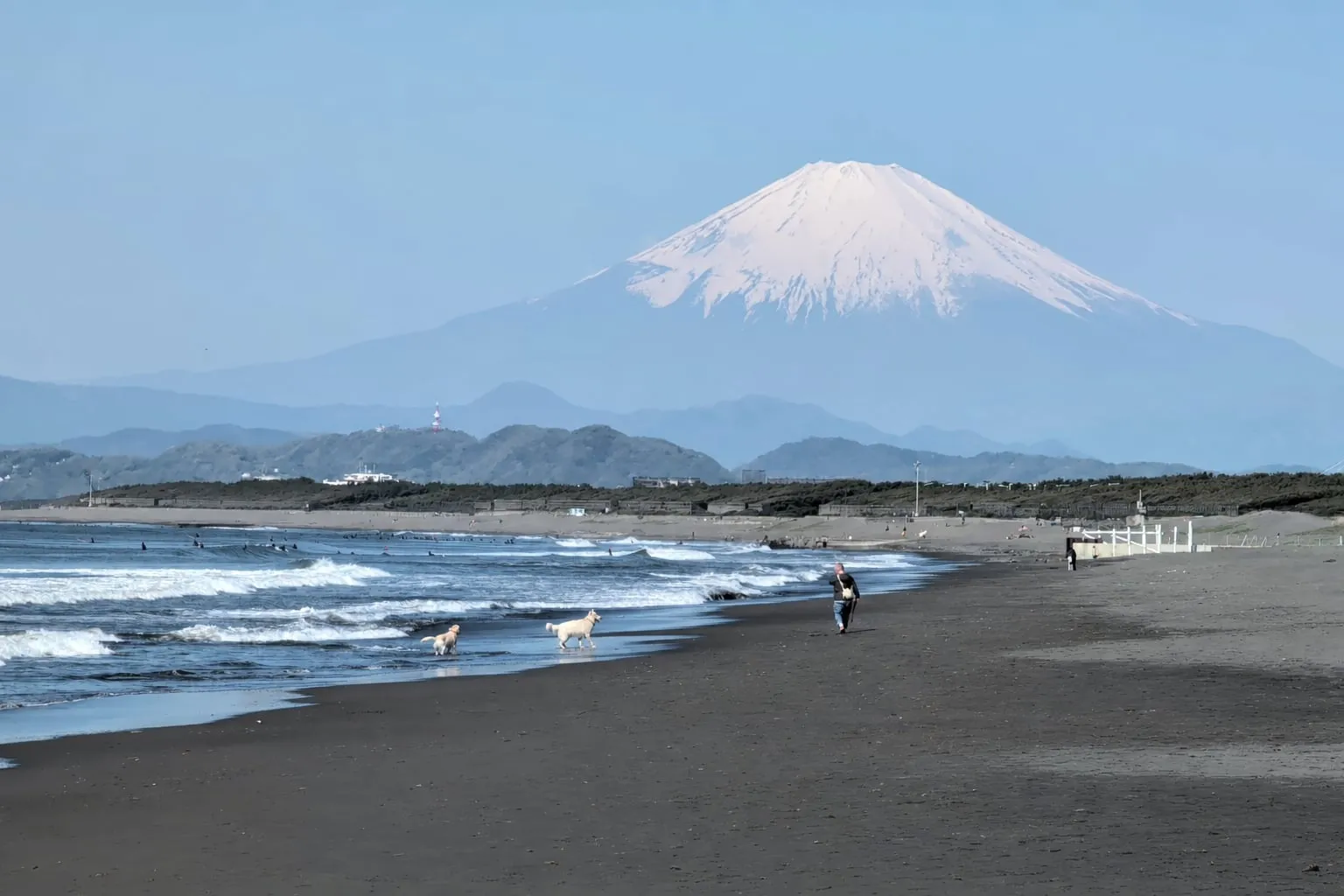
Can you surf in Tokyo?
Not in the city itself — Tokyo Bay is sheltered and doesn't get surfable waves. But the open Pacific coast is closer than most visitors realize. Two regions just outside the city get consistent, beginner-to-advanced surf, and both work as an easy day trip from central Tokyo:
- Shonan (Sagami Bay, near Enoshima) — about 90 minutes away.
- Chiba (the Pacific coast, Sotobo) — 90 minutes to the northern beaches, up to 120 minutes to the south.
Roads have improved a lot over the last decade — the Tokyo Bay Aqua-Line in particular roughly halved the drive to southern Chiba — so a same-day round trip is genuinely relaxed now. So the honest answer is: you can't surf in Tokyo, but you can absolutely surf from Tokyo, and be back in the city by mid-afternoon.
Where you'll surf: Chiba vs Shonan
Which coast we go to depends on the day's wind and swell — choosing the one that's actually working that morning is a big part of what a local guide is for. The two areas have genuinely different characters:
Chiba — open Pacific, more consistent, more power
Chiba faces the open Pacific, so it picks up the most consistent swell near Tokyo and the waves carry more punch. The northern beaches (around Katakai and the well-known Ichinomiya, ~90 minutes out) include gentle, beginner-friendly spots like Taito as well as Shidashita (Tsurigasaki) — the Tokyo 2020 Olympic surfing venue, which is an experienced-level wave that intermediates can still enjoy. Head further south (around Onjuku, Wada and Kamogawa) and the water gets cleaner and warmer, thanks in part to the nearby Kuroshio current.
Shonan — a bay, smaller and cleaner, easy to start
Shonan sits inside the wide curve of Sagami Bay. Waves are generally smaller than Chiba, but the bay shape keeps them organized and tidy, so even small days are very surfable — that's the key difference from Chiba. It's also the easiest area to reach by train, which is why most Tokyo surfers learn here (especially around Fujisawa: Kugenuma and Tsujido beaches, where everyone from first-timers to pros shares the lineup). It gets crowded for the same reason. On a clear day you can surf with a full view of Mt. Fuji on the horizon — stand there once and you understand exactly what Hokusai was painting.
One practical note: almost every day-trip spot near Tokyo is a beach break, which is forgiving and good for learning. The main reef exception is Kamakura, which is relatively open to visitors and lights up beautifully when a swell comes in. Most other reefs are effectively secret or difficult for visitors — and local respect always matters in the water.
For a spot-by-spot rundown — who each beach suits and when to go — see our guide to the best surf spots near Tokyo.
Getting there: car or train?
Shonan is genuinely doable by train. Chiba is possible by train to the northern beaches but slower, with a transfer from the nearest station, so it's worth contacting a surf shop ahead — and southern Chiba is really a car trip for a day visit. For most visitors, going by car (or with a guide who drives) is the simplest way to make a Chiba day trip work.
What a surf day trip from Tokyo looks like
A typical private day with us runs about 8 hours, roughly 7am to mid-afternoon:
- 7:00 — Pick-up. We collect you from your hotel anywhere in Tokyo, free of charge, and talk through your surfing level on the way.
- Choose the coast. Based on your level and the day's conditions, we decide between Shonan and Chiba — about 90 minutes' drive either way.
- Surf. Around two hours in the water, with boards and wetsuits provided and your guide supporting you from the beach or the lineup.
- Lunch & back to Tokyo. A relaxed local lunch, then back to your hotel by around 3pm. Surf lessons can be added as an option.
Want the full picture? Here's exactly how a surf day trip from Tokyo works, hour by hour.
What's included
The trip is designed so you can show up with almost nothing:
- Free pick-up & drop-off in the Tokyo area
- English-speaking surf guide for the whole day
- Surfboard and wetsuit rental
- Surf spot selection based on the day's conditions
- Safety briefing, local etiquette, and in-water support
- Insured local guide
Surf lessons (¥8,000 per person) are recommended for beginners. Secondhand Surfboard Shop and Japanese Bath Visit are optional extras. No photo/video service. Just bring swimwear, a towel, sunscreen, and some cash for food.
Can beginners surf near Tokyo?
Yes. Complete beginners are welcome. On the right day we'll pick a gentle, beginner-friendly beach — somewhere like Taito or Onjuku in Chiba, or the Fujisawa beaches in Shonan — and a one-on-one lesson can be added so you're not figuring it out alone. The goal is for first-timers to actually stand up and have fun, not just paddle around.
First time on a board? Our beginner's guide to surfing near Tokyo covers whether you need a lesson, the board you'll ride, and honest answers on sharks, swimming, and age.
Surfing in Japan without speaking Japanese
This is where a guided trip earns its keep. Reading the conditions, picking between Chiba and Shonan, parking, renting gear, and understanding local lineup etiquette — including which reefs you simply shouldn't paddle out to as a visitor — are all real friction points if you don't read or speak Japanese. Your guide handles all of it.
I grew up partly in the US, so I'm fully bilingual, and I've been surfing for nearly 30 years — including thousands of day trips from Tokyo to these exact coasts. You get the local knowledge in plain English.
Best season to surf near Tokyo
You can surf near Tokyo year-round with the right wetsuit. Because these are Pacific-facing breaks, winter is actually the most consistent season — the classic winter pressure pattern pushes swell onto the coast day after day. For pure size and quality, though, the typhoon season from summer into autumn delivers the best waves of the year.
Water temperature matters more than air temperature for comfort, and it splits by region. Northern Chiba faces the open Pacific and runs coldest; Shonan (a bay) and southern Chiba (near the warm Kuroshio current) stay milder. As a rough guide, you'll want a 5mm wetsuit with boots in winter, a 3mm in spring and autumn, and just boardshorts or a spring suit in summer — a little thicker in northern Chiba, a little lighter in Shonan and southern Chiba. Summers are hot (high 30s°C, so watch for heat), and winters can drop near 0°C, but near Tokyo a semi-dry suit is plenty — you don't need a drysuit the way you would further north.
How much does a Tokyo surf trip cost?
Our private day trip starts from ¥64,000 per person (¥88,000 for a solo booking), for up to two surfers; non-surfing companions are ¥10,000 each (up to two). That's a fully private tour — transport, board, and wetsuit included, tax included, roughly 8 hours. Booking is through GetYourGuide with free cancellation up to 24 hours in advance.
Planning your trip
If you're visiting Tokyo and want a real day in the ocean — without renting a car, decoding train routes to the coast, or guessing which beach is working — this is the easy way to do it. We'll match the spot to your level and the day's conditions, and handle everything in between.
Ready to surf near Tokyo?
Private day trip from Tokyo · English-speaking guide · From ¥64,000 per person (2 surfers; ¥88,000 solo) · Free cancellation up to 24h.
Book on GetYourGuide